Tag: Economics

  • The Economic Problem

    In simplistic terms the Economic Problem is that we always want more than we have the resources for.

    Our wants are unlimited and our resources are limited. In other words there is scarcity of the things that we want either as individuals, businesses or nations.

    As the result of scarcity we have to make choices.

    Scientists suggest that in traditional societies that humans had to make 2,500 decisions per day. Today we make about 35,000 decisions per day.

    I wonder how many you have made already today?

    From an economic perspective, when we make those choices, we are trying to ensure that we are making the best use of the scarce resources available to us.

    As an individual, would a bowl of cereal or a bowl of fruit be a better choice of breakfast.

    For a business, should they buy employ staff or install self serve kiosks.

    For a nation, allow individuals to keep all their income and allow them to choose where to spend it or tax their income and spend it on their behalf.

    In summary.

    The Economic Problem is the problem of scarcity, where unlimited human wants exceed the limited resources available to satisfy them.
  • Is it Micro or Macro Economics?

    Often you will hear reference to Microeconomics or Macroeconomics.

    What is the difference between the two?

    Micro applies to individual parts of the economy whilst macro applies to the economy as a whole.

    If there is a discussion about the wages of nurses, then this is the realm of microeconomics.

    A discussion of the wage level in the economy as a whole is macroeconomics.

    Much of the discussion that you hear in the news is macroeconomics. Its about the state of the economy, how fast prices are rising, the level of unemployment, the balance of payments and how fast or slow the economy is growing.

    Microeconomics will be more specific, the impact of car travel on the economy, whether we are eating too much red meat, the cost of health care etc.

    Simple ways to remember it.

    • Micro = individual parts of the economy (people, firms, markets).
    • Macro = the whole economy (countries, national income, inflation, unemployment).

    Or

    • Microeconomics is looking at a single tree.
    • Macroeconomics is looking at the entire forest.

    EXAM TIP:

    Most exam papers have a paper on Microeconomics, even if its not called that, and one of Macroeconomics.

    So if you are asked about the impact say of subsidies for electric vehicles (EVs) and you start responding, that it will increase the demand for EVs and so create employment opportunities and so the rate of unemployment will fall in the economy, you will not be answering the question.

    Some papers will be a mixture of the two and your job is to give the appropriate micro or macro response.

  • What Is Economics All About?

    You will get many definitions explaining what Economics is all about.

    The key point about Economics in my opinion is that it is the study of choice.

    We live in a world where there are unlimited wants and limited resources. In essence this explains almost everything that you read or hear in the news.

    Due to this fact we constantly have to make choices about what wants we want to fulfil with our limited resources.

    Many people will tell you that Economics is all about money. However this is not strictly true. Money is what is called a medium of exchange, it allows us to swap the goods and services that we are individuals create for those created by others.

    This leads us to general meaning of the word Economics, that it is

    • of or relating to the science of economics
    • using the minimum of time or resources necessary for effectiveness
    • financially rewarding

    The price that we pay with the money we have reflects the relationship between the changing want and / or the changing amount of the resource of a good or service.

    As I write (Sept 2026), the price of oil is rising. In this case the amount of the resource is being restricted because of unrest that is influencing the flow of oil through the Strait of Hormuz and the Bab al-Mandab Strait.

    When prices rise, two things happen. People will make a choice to try to supply more of the good or service due to the price being higher and in theory there is more profit to be made.

    People will make a choice to demand the same amount of the good or service or less of good or service because when prices rise if they continue to buy the same amount, then they will have to choose to less to spend of other goods and services.

    A typical comment from a student in class to a request they are not keen on, will be:

    “I don’t have a choice, do I?”

    Yes they do, everyone has a choice, it’s just that they might not like the choice that they are being given.

    Lionel Robbins, the British Economist wrote:

    “”Economics is the science which studies human behaviour as a relationship between ends and scarce means which have alternative uses.”

  • Origin of the word – Economics

    The modern English word Economics derives from the Greek word – Oikonomia.

    Oikonomia itself is a combination of two Greek works

    “Oikos” and “Nomos“

    Oikos — meaning more or less the household or family estate — and Nomos, which can mean rules, natural laws or laws made by the government, but which in this case primarily means “wise laws” or “rules of thumb.”

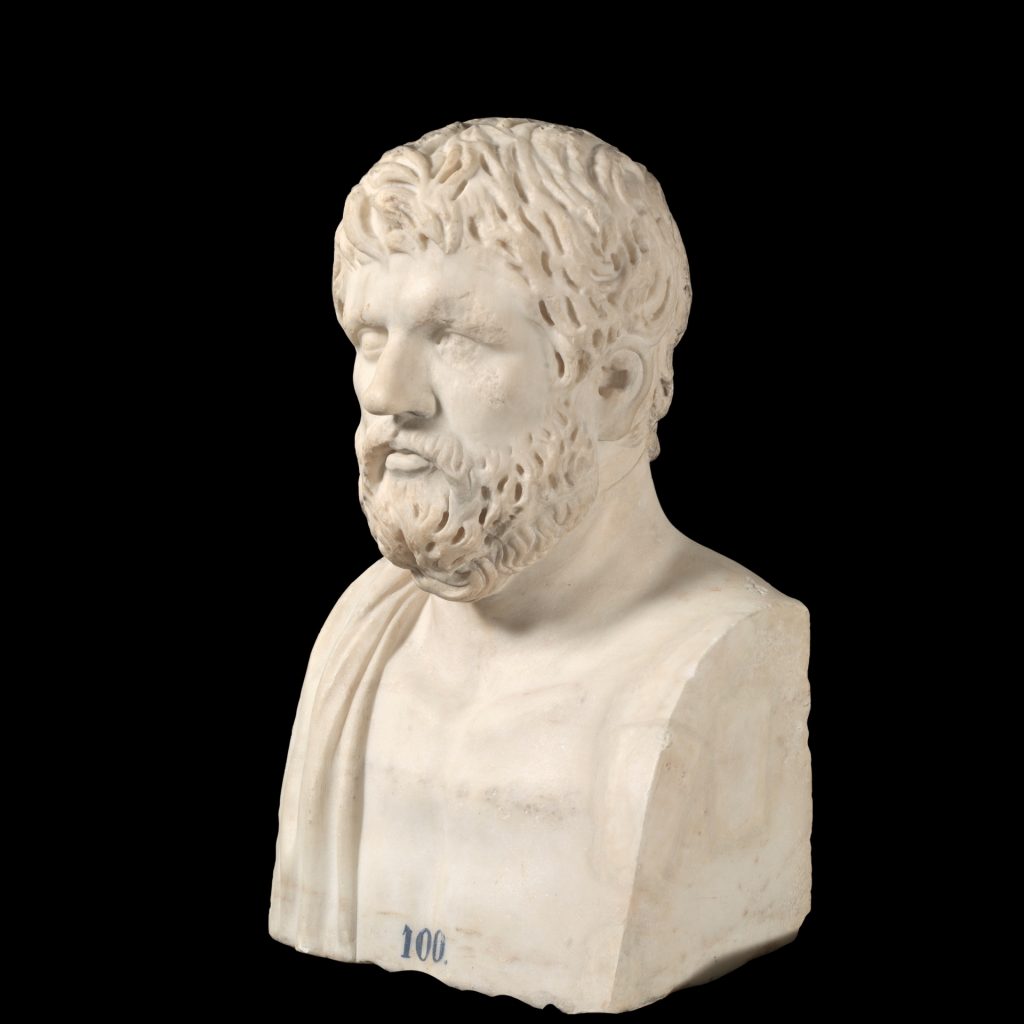
    Image of Xenophon.  Copyright of the Museo Nacional del Prado, Madrid.
    Xenophon

    Thus the book Oikonomia, by the Greek author Xenophon, is probably best translated as “rules of thumb for estate management.”

    Xenophon was a soldier who became one of the most influential authors from this ancient world.

    In his book he developed some key ideas including

    • Wealth depends on use, not possession. Something is truly wealth only if a person knows how to use it beneficially. A horse, land, or money can be an asset or a burden depending on the owner’s knowledge and judgment.
    • Management is a skill. Household administration as a form of expertise that can be learned and applied.
    • Agriculture is the ideal occupation. Farming is praised as being both profitable and morally beneficial.
    • Leadership and organization matter. A good manager motivates workers, organizes resources, and creates order.